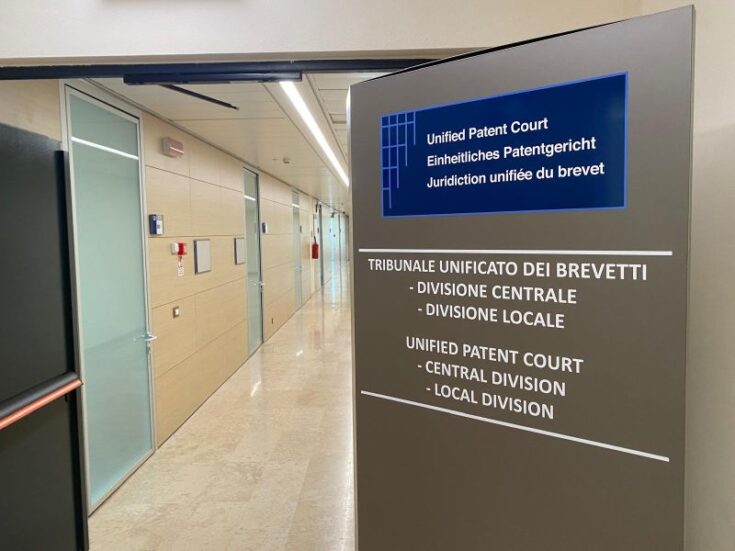
With two recent orders, the Milan Local Division of the Unified Patent Court (UPC), which has already been in the spotlight in Europe for its pragmatic approach to preliminary orders, has clarified some important aspects concerning the grant of provisional measures for collecting evidence provided for in the UPC system (equivalent to the Italian search orders or the saisie available in France and Belgium).  

Specifically, the Local Division upheld the orders for preservation of evidence previously issued in the cases Prinoth v. Xelom (decision of 27 October 2025, Judge Zana) and 3V Sigma v. ACEF (decision of 5 December 2025, Presiding Judge Perrotti). In both cases, the defendant companies against which a preservation of evidence order had been issued and enforced ex parte had requested a review of the order.  

First and foremost, these decisions clarify the evidentiary threshold required for obtaining an order to preserve evidence. The Milan Local Division confirms that it is not necessary for the applicant to present definitive proof that the patent has been infringed, as only “sufficient evidence” is required to establish the logical and factual consistency of the claims, based on a credible and adequately supported assessment, conducted at the time of filing the request. The evidence offered by the applicant must also be “reasonably available”, i.e. under the direct control of the applicant, so that its acquisition does not require unreasonable effort.

The Milan Local Division also explicitly clarifies – as is already undisputed in national case law, including Italian case law – that (1) the substantive assessment of the alleged infringement of the patent asserted is left to the subsequent proceedings on the merits, following inter partes discussion, where the defendant will be able to fully develop its defensive arguments, and not to the (preliminary) phase, which is only devoted to granting evidentiary protection, and (2) the Court must not investigate the validity of the patent, which is necessary only when the patent holder requests a PI order that, both in preliminary proceedings as well as in proceedings on the merits, affects the substantive rights of the defendant.

Another relevant aspect concerns the urgency requirement. Unlike in case of provisional measures – for which the UPC Agreement and the Rules of Procedure require an assessment of any “unreasonable delay” on the part of the applicant in taking action to protect its rights – the Local Division downplays the relevance of this requirement in the context of preservation of evidence measures: their function, which is only collecting evidence and does not correspond to that of provisional measures, does not require proof of urgency per se. Rather, the applicant should prove, on the one hand, the necessity of the measures requested for the purpose of collecting evidence of infringement, which would not otherwise be available, and, on the other hand, the existence of an actual – albeit not certain – risk of destruction of the evidence itself.

The case law of the Milan Local Division is therefore at the forefront as regards provisional measures in the UPC system. Through a pragmatic use of all the tools provided by the new system, the Italian-based Local Division – thanks in part to the previous national experience of its judges – contributes to the development of European best practices on an issue that is essential for ensuring effective protection of patent holders’ rights, without neglecting the principles of proportionality and procedural guarantees for the defendants.

Con due recenti provvedimenti, la Divisione Locale di Milano del Tribunale Unificato dei Brevetti (UPC), già distintasi nel panorama europeo per l’approccio pragmatico in tema di provvedimenti cautelari, ha chiarito alcuni importanti profili in tema di concessione delle misure cautelari di raccolta della prova previste nel sistema UPC (equivalenti alla descrizione italiana o alle saisie disponibili in Francia e Belgio).

La Divisione Locale ha infatti confermato i provvedimenti di preservation of evidence emessi nei casi Prinoth v. Xelom (decisione del 27 ottobre 2025, giudice Dott.ssa Zana) e 3V Sigma v. ACEF (decisione del 5 dicembre 2025, giudice Pres. Dott. Perrotti). In entrambi i casi, le società resistenti nei cui confronti era stato emesso ed eseguito un ordine di preservation of evidence inaudita altera parte avevano chiesto il riesame del provvedimento cautelare.

Ciò che emerge da tali provvedimenti, in primo luogo, è il chiarimento circa soglia probatoria richiesta ai fini dell’ottenimento di un provvedimento di preservation of evidence. In particolare, la Divisione Locale di Milano conferma come non sia necessario che il richiedente presenti una prova piena della contraffazione del proprio titolo brevettuale, essendo sufficiente la presentazione di “elementi di prova sufficienti” a verificare la coerenza logico-fattuale della prospettazione, secondo una valutazione ex ante da compiersi sulla base di una ricostruzione argomentativa adeguatamente supportata e credibile. Le prove offerte dal ricorrente devono inoltre essere “ragionevolmente accessibili”, ossia sotto il suo diretto controllo, di modo che la loro acquisizione non richieda sforzi irragionevoli.

La Divisione Locale di Milano inoltre chiarisce esplicitamente – come del resto già pacifico nella giurisprudenza nazionale, anche italiana – che (1) la compiuta valutazione in ordine alla presunta contraffazione del brevetto azionato dal richiedente è rimessa al successivo giudizio di merito, in contraddittorio tra le parti, laddove il convenuto potrà pienamente svolgere tutte le proprie difese, e non già alla fase – sommaria – deputata solo alla concessione della tutela probatoria, e (2) il Tribunale non deve indagare nel merito neanche la validità del titolo brevettuale, accertamento invece necessario quando il titolare chiede un ordine inibitorio che, sia in sede cautelare sia in sede di merito, incide invece sul diritto soggettivo sostanziale del convenuto.

Un ulteriore profilo di rilievo attiene al requisito dell’urgenza. Diversamente da quanto previsto per l’adozione di provvedimenti inibitori (“provisional measures”) – per i quali l’Accordo UPC e le Rules of Procedure impongono la valutazione di un eventuale “unreasonable delay” del richiedente nell’agire a tutela dei propri diritti –, la Divisione Locale ridimensiona la rilevanza di tale requisito nell’ambito delle misure di preservation of evidence: la loro funzione, strumentale e autonoma rispetto ai rimedi inibitori cautelari, non richiede la prova dell’urgenza, bensì solamente la prova da un lato della necessità delle misure richieste ai fini dell’acquisizione della prova della contraffazione, che non sarebbe disponibile altrimenti, e dall’altro della sussistenza di un concreto – ancorché non certo – rischio di distruzione della prova stessa.

La giurisprudenza della Divisione Locale di Milano si conferma dunque all’avanguardia in materia di misure cautelari nel sistema UPC. Disponibile a utilizzare in modo pragmatico tutti gli strumenti previsti dal nuovo sistema, la Divisione Locale italiana – anche grazie alla pregressa esperienza nazionale dei propri giudici – contribuisce allo sviluppo di best practices europee su un tema essenziale per garantire un’effettiva tutela dei diritti dei titolari di brevetti, senza trascurare i profili di proporzionalità e garanzia nei confronti dei soggetti convenuti.

Con Sentenza del 12 novembre 2025, la Sezione Specializzata in materia di Impresa del Tribunale di Venezia ha fornito un’interpretazione di notevole rilievo in materia di tutela dei diritti di privativa su varietà vegetali, soffermandosi in particolare sul contenuto dell’obbligo di diligenza gravante sugli operatori professionali del settore sementiero e sulla corretta applicazione dell’art. 94 del Reg. CE n. 2100/94. 

La pronuncia riveste particolare importanza poiché rappresenta uno dei primi contributi giurisprudenziali a pronunciarsi sulla distinzione tra l’“equa compensazione”, prevista dal primo comma dell’art. 94, Reg. CE n. 2100/94, e il risarcimento del danno, regolato dal secondo comma dello stesso articolo. Tale distinzione si fonda su una lettura rigorosa del concetto di ‘negligenza’, che comporta l’applicazione di uno standard elevato di diligenza professionale per gli operatori della filiera sementiera e, in generale, per chiunque intenda moltiplicare o riprodurre varietà vegetali protette da diritti di privativa.

I fatti di causa

La controversia trae origine dall’azione promossa da Limagrain Europe S.A.S., titolare della privativa comunitaria sulla varietà di pisello proteico denominata “Audit”, nei confronti di una società sementiera italiana. A quest’ultima era stata contestata la moltiplicazione e commercializzazione di semi della stessa varietà, effettuate senza alcuna autorizzazione né del titolare né, nello specifico, della licenziataria italiana Limagrain Italia S.p.a. o della mandataria francese Sicasov.

In particolare, la convenuta, in concorso con altre due imprese sementiere, aveva acquistato in Germania, presso un distributore autorizzato da Limagrain Europe, sementi di “prima riproduzione” (o “R1”) della varietà protetta. Successivamente, tali sementi erano state trasferite in Ungheria, dove erano state illecitamente moltiplicate. In seguito, il materiale così ottenuto era stato reintrodotto sul mercato italiano e venduto come sementi di “seconda riproduzione” (o “R2”) destinate alla risemina.

Citata in giudizio dinanzi al Tribunale di Venezia, la convenuta non aveva svolto contestazioni in punto di fatto, ma aveva eccepito la propria buona fede, sostenendo di non essere stata informata dal distributore ufficiale che la varietà “Audit” fosse protetta da diritti di privativa. Aveva quindi ritenuto che, non avendo agito in modo deliberato o negligente, le conseguenze della violazione dovessero limitarsi alla corresponsione di un’equa compensazione, come previsto dal primo comma dell’art. 94, Reg. CE n. 2100/94, escludendo così il più gravoso obbligo di risarcimento del danno previsto dal secondo comma dello stesso articolo.

La normativa di riferimento e l’interpretazione fornita dal Tribunale di Venezia

Il fulcro della decisione del Tribunale di Venezia risiede nell’analisi dell’articolo 94, Reg. CE n. 2100/94, che disciplina le conseguenze della violazione dei diritti del costitutore di una varietà vegetale protetta a livello europeo.

La norma prevede un doppio livello di tutela: il primo comma stabilisce che chiunque compia, senza l’autorizzazione del titolare, uno degli atti di sfruttamento esclusivo elencati all’art. 13 del medesimo Regolamento (come la produzione, la moltiplicazione e la commercializzazione di costituenti varietali) può essere convenuto in giudizio affinché sia disposta la cessazione della violazione, la corresponsione di un’equa compensazione, oppure entrambe le misure. Questa tutela prescinde da qualsiasi elemento soggettivo (dolo o colpa) dell’autore della violazione.

Il secondo comma prevede invece che, qualora l’autore della violazione abbia agito deliberatamente o per negligenza, egli è tenuto anche a risarcire il danno subito dal titolare. In questo caso, è necessario un accertamento della colpa dell’agente e, in caso di colpa lieve, il risarcimento può essere ridotto in misura non inferiore al vantaggio ottenuto dall’autore dell’infrazione.

Il Tribunale di Venezia, nel decidere quale delle due previsioni dovesse applicarsi al caso concreto, ha anzitutto chiarito che, ai fini dell’applicazione dell’obbligo risarcitorio di cui all’art. 94, comma 2, Reg. CE n. 2100/94, non rileva lo stato soggettivo di buona o mala fede, ma è sufficiente accertare che l’autore della condotta abbia agito con negligenza.

La nozione di ‘negligenza’ assume dunque un ruolo decisivo nel discriminare tra le due forme di tutela: solo attraverso un’interpretazione sostanziale del concetto di ‘diligenza professionale’ è possibile applicare coerentemente la gradazione di responsabilità prevista dalla norma. In tal senso, la valutazione della negligenza non si esaurisce nell’accertamento della buona o mala fede soggettiva, ma richiede di verificare se l’operatore abbia adottato tutte le cautele che, secondo gli standard del settore, erano ragionevolmente esigibili per evitare la violazione.

Il Tribunale di Venezia ha fornito una definizione puntuale del concetto di ‘negligenza’ in questo contesto, precisando che:

“Il concetto di negligenza deve essere valutato tenendo conto della diligenza media richiesta all’operatore del settore di riferimento e quindi, nel caso di specie, di imprenditori dediti al commercio di sementi e di varietà vegetali, i quali certamente sono tenuti non solo a conoscere l’esistenza della disciplina che vieta gli atti di riproduzione di varietà vegetali senza l’autorizzazione del titolare ma anche ad informarsi preventivamente nonché a verificare se i prodotti che intendono commercializzare o riprodurre siano o meno coperti da privativa, al fine di evitare di incorrere nelle sanzioni di legge”.

Secondo il Giudice veneziano, la convenuta, prima di procedere alla moltiplicazione delle sementi, aveva l’onere di verificare, tramite l’accesso alle banche dati pubblicamente disponibili, se si trattasse di una varietà protetta. E ciò a maggior ragione nel caso di specie ove la fattura del distributore ufficiale tedesco di Limagrain Europe, da cui la convenuta aveva acquistato semi di prima riproduzione, riportava a chiare lettere l’esatta denominazione (“Audit”) della varietà.

La circostanza, addotta dalla convenuta, che il venditore non avesse segnalato l’esistenza di diritti di privativa sulla varietà è stata ritenuta ininfluente e non idonea a escludere la colpa. L’obbligo di informazione grava direttamente sull’operatore che intende sfruttare economicamente la varietà, il quale non può fare affidamento passivo sulle dichiarazioni o omissioni di terzi.

In altri termini, la sentenza in commento individua un onere di diligenza qualificata per le imprese che operano nell’ambito della riproduzione/moltiplicazione e commercializzazione del materiale di propagazione di varietà vegetali, che impone un obbligo di verifica della sussistenza di diritti di privativa varietale prima di procedere alla eventuale moltiplicazione. Di conseguenza, l’omissione “negligente” di tale verifica determina la responsabilità per colpa ai sensi del secondo comma dell’art. 94, Reg. CE n. 2100/94.

In forza dell’accertamento della condotta negligente della convenuta, il Tribunale di Venezia ha quindi riconosciuto in capo a Limagrain Europe il diritto al pieno risarcimento del danno, applicando i criteri previsti dalla legislazione nazionale (art. 125 CPI), come previsto dall’art. 97, Reg. CE n. 2100/94. Inoltre, è stata pure inibita alla convenuta la prosecuzione dell’attività illecita con fissazione di una penale per ogni eventuale violazione successiva alla pronuncia del provvedimento di inibitoria.

Conclusioni

La sentenza del Tribunale di Venezia segna un punto fermo nella tutela delle privative vegetali in Italia. Essa chiarisce in modo inequivocabile che l’ignoranza circa l’esistenza di un diritto di privativa non costituisce un’esimente per un operatore professionale del settore, essendo gli strumenti per acquisire tale conoscenza facilmente disponibili.

La decisione eleva la diligenza richiesta, trasformandola in un vero e proprio onere di verifica preventiva, la cui omissione costituisce di per sé negligenza.

Questa interpretazione rafforza significativamente la posizione dei titolari di diritti di privativa, consentendo loro di accedere più agevolmente alla tutela risarcitoria piena prevista dal secondo comma dell’art. 94, Reg. CE n. 2100/94, superando la mera “equa compensazione” di cui al primo comma del medesimo articolo.  Inoltre, la pronuncia offre un’applicazione pratica dei meccanismi di interazione tra normativa comunitaria e nazionale, chiarendo come, una volta accertata la colpa, il titolare possa beneficiare dei più ampi rimedi previsti dall’ordinamento interno, inclusa la retroversione degli utili del contraffattore ai sensi dell’art. 125, comma 3, CPI.

Il principio affermato dal Tribunale di Venezia – certamente applicabile a qualsiasi controversia riguardante diritti di privativa su varietà di qualunque specie – rappresenta, dunque, un importante deterrente contro la circolazione e lo sfruttamento non autorizzato di varietà protette, imponendo a tutti gli operatori della filiera un più elevato standard di correttezza e responsabilità professionale.

A landmark decision from the Court of Venice has significantly raised the bar for professional diligence in the seed industry, clarifying the crucial distinction between “equitable remuneration” and full damages for the infringement of plant variety rights under Regulation (EC) No. 2100/94. The decision establishes that, for professionals operating in the sector, ‘lack of knowledge’ of the existence of IP rights is no excuse.

The dispute arose when Limagrain Europe S.A.S., the holder of a Community plant variety right for the “Audit” protein pea variety, took legal action against an Italian seed company for unauthorized multiplication and commercialization of the IP protected variety. The defendant company had purchased “first reproduction” seeds (R1), then unlawfully multiplied them into “second reproduction” seeds (R2), and sold them on the Italian market. While not contesting the material facts, the defendant argued it had acted in good faith, as the original seller had not informed him that the variety was protected by intellectual property rights. Consequently, it claimed liability should be limited to the “equitable remuneration” as set forth in Article 94(1) of Regulation (EC) No. 2100/94, rather than full damages for negligent infringement under Article 94(2).

The Court of Venice rejected the defendant’s claim of “good faith” and focussed the analysis on the objective standard of professional negligence required of industry operators. The ruling stresses that for operators in the seed and plant variety sector, diligence is not a passive expectation but an active duty.

The Court outlined the expected standard of care:
The concept of negligence must be evaluated by taking into account the average level of diligence required of operators in the relevant sector and therefore, in this case, of entrepreneurs engaged in the trade of seeds and plant varieties. Such operators are certainly required not only to be aware of the regulatory framework prohibiting the reproduction of plant varieties without the holder’s authorisation, but also to proactively inform themselves and verify whether the products they intend to market or reproduce are protected by a plant variety right, in order to avoid incurring legal sanctions”.

In essence, the Court established a positive duty to conduct clearance checks in the plant variety sector. Operators intending to reproduce or market a plant variety cannot rely on information (or lack thereof) from third parties. Instead, businesses are expected to use publicly available resources, such as official databases, to confirm whether a plant variety is protected by an intellectual property right. Failure to conduct these checks constitutes negligence.

By finding the defendant negligent, the Court unlocked the more severe remedies under Article 94(2) of the Regulation (EC) No. 2100/94 which compensates the rightholder for losses caused by intentional or negligent exceeding the “equitable remuneration” applicable for non-negligent and non-intentional acts.

Furthermore, the Court confirmed that, in line with Article 97 of the Regulation (EC) No. 2100/94, the calculation of damages can be governed by national law. This allowed the application of Article 125 of the Italian Code of Industrial Property, enabling Limagrain Europe to claim full recovery of damages, including the infringer’s profit, a significantly more powerful remedy than mere equitable remuneration. An injunction was also issued to prevent future unlawful activity.

The decision of the Court of Venice is a pivotal development in the enforcement of plant variety rights. It effectively eliminates the “lack of knowledge” defence for professional operators and transforms professional diligence into a proactive duty of inquiry. Moreover, this decision significantly strengthens the position of IP rightholders, making it substantially easier to secure full compensation for infringement.

In the highly anticipated copyright decision of 4th December CJEU has ruled that as regards the scope of copyright protection for works of ‘applied art’ the author’s personality must be reflected in the works for which copyright protection is claimed through his ‘free and creative choices’ without a stricter requirement than for traditional copyright protected works.

Product lines affected include design furniture and other functional design products such as lighting fixtures, kitchen appliances, footwear and other fashion accessories, jewellery and consumer electronics.

As a consequence of the decision copyright infringement will depend on whether the reproduction is ‘recognisable’ when comparing the two products rather than an  ‘overall visual assessment’ test.

The CJEU, in making this preliminary ruling, joined two furniture cases: Swedish Mio (C-580/23) and German USM Haller (C-795/23).

Referral C-580/23 (Mio) of the Swedish Court

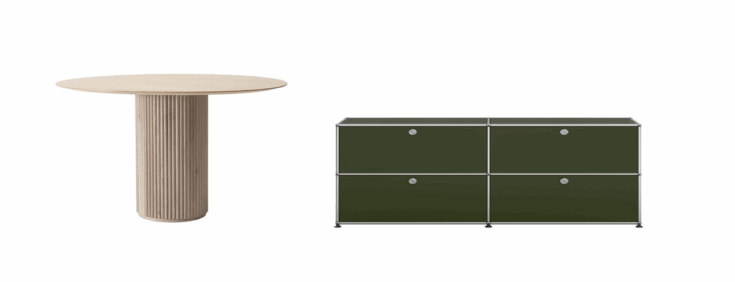
The first case relates to an allegedly infringing dining table in the ‘Cord’ series produced by the Swedish company Mio which has strong similarities with the original dining table in the ‘Palais Royal’ series produced by the Swedish plaintiffs Galleri Mikael & Thomas Asplund. Asplund brought action based on copyright infringement claiming their tables were protected by copyright as works of applied art. The defendants argued that the tables were not sufficiently original to claim copyright protection and even if they were, the copyright was so limited and restricted that the differences between the models of tables was not sufficient to demonstrate copyright protection.

The Court of Appeal stayed the proceedings and referred questions to the CJEU for a preliminary ruling on Directive 2001/29/EC.

Referral C-795/23 USM Haller System

The second case relates to a modular furniture system produced by the Swiss company USM Haller characterised by the assembly of chrome tubes and connecting balls to form a furniture structure into which coloured metal panels are inserted. The defendant, the German company Konetra initially sold spare parts online then manufactured, offered and marketed  its own furniture system, identical to that of USM. USM claimed that Konektra’s offer infringed copyright in the USM Haller system as a work of applied art. While the Court of 1st Instance in Germany upheld the claims, on appeal the Higher Regional Court, Dusseldorf Germany dismissed the claims. The Federal Court of Justice in Germany stayed the proceedings referring questions to the CJEU for a preliminary ruling.

The CJEU was required to give interpretations on Arts 2(a), 3(1) & 4(1) of Directive 2001/29/EC on Harmonisation of certain aspects of copyright and related rights in the information society.

Key CJEU Findings

  1. Works of applied art are not subject to a higher or stricter ‘originality’ threshold that other copyright works;
  2. Aesthetic appeal is not relevant while a reflection of the creator personality in the work and evidence of his ‘free and creative’ choices are;
  3. Infringement findings are not to be based on the ‘overall visual impression’ comparing the two objects but rather whether creative elements are recognisable in the allegedly infringing work. 

What is the ‘originality’ test for copyright for applied art?

The court found that ‘originality’ in copyright in applied-art cases requires that:

  • the creators’s personality be reflected in the work through the creator’s ‘free and creative choices’;  
  • Works satisfying the condition of originality may be entitled to copyright protection, even if the creation is partly dictated by technical considerations, provided that the technical constraints have not prevented the creator from reflecting his or her personality in that work, as an expression of ‘free and creative’ choices;
  • The ‘originality’ assessment is found in the product itself and not in external factors which may be taken into account but are not necessary or decisive.

This broadly follows the recommendation of the Advocate General on 8th May 2025 and aligns with the approach taken in the earlier established case law in Brompton Bicycle (C-833/18) and Cofemel (C-683/17).

The court confirmed that this protection applies to the work as a whole and/or to components or individual parts of a utilitarian work, provided they contain elements which are the original expression.

Regarding ‘artistic and aesthetic considerations’, the CJEU held that while artistic and aesthetic elements may play a part in creative activity, the fact that a work of applied art is artistic or aesthetic does not, alone, make it possible to determine whether that work constitutes an intellectual creation reflecting the freedom of choice and personality of its author, thereby meeting the requirement of originality (Cofemel C-683/17). The decisive factor is the latter.

Choices dictated by technical constraints

For works of applied art, the work is usually influenced by technical, ergomic and safey constraints which do not, in themselves establish any originality. To establish originality the author has to go beyond these constraints.

The court stated that choices dictated by various constraints (such as technical constraints or regulations) which bind the author during the creation of the work are not creative. They are not free choices and do not bear the imprint of the author’s personality by giving the work a unique appearance.  

Relevance of intentions of the author be taken into account?

While both the creative process and the author’s intentions or explanations about the creative process may be taken into account, these are not the base for the assessment nor are they decisive.  The author’s intentions lie within the realm of ideas. They are protected only in so far as the author has ‘expressed’ them in the work concerned. ‘Internal intentions’ are only relevant if they manifest themselves externally in the visible object created.

Other Factors

On the question of shapes the CJEU confirm that a work can still be protected if, despite using existing shapes, those shapes are arranged in such a way that they express a creative decision.

Inspiration from existing works does not appear to be negate copyright protection as long as the later work is a variant which has originality even if the degree of originality is low.

Presentation at museums or trade fairs and recognition in professional circles after creation are not necessary or decisive although they may be taken into account because originality arises at the time of creation.

Generally factors external to and subsequent to the creation have limited relevance. The focus remains squarely on the product itself and whether it embodies creative choices.

Relationship between design and copyright

The court negates the view that the primary regime for utilitarian products is design law and the copyright law is an exception. A product protected by registered design may also be protected under copyright law if the copyright protection criteria are met  – namely the ‘originality’ as defined above.

Generally design law protects products intended for industrial production that are both new and have individual character for a limited time (25 years). When it comes to infringement an ‘overall similar impression’ test is applied in design law. By contrast copyright law focuses on the expression of the author’s intellectual creation.  The protection is for the life of the author plus 70 years so considerably longer.   

The CJEU has held that copyright serves different purposes, pursues different objectives and is subject to distinct rules than design; there is no automatic connection between grant of protection under design law and the grant of protection under copyright law. While they are not mutually exclusive and may be granted cumulatively, this is however limited to certain situations.

Copyright Infringement

Under copyright law, an infringement is the consequence of use of the work without the author’s consent. This is the case even where it concerns a relatively minor part of the work. While in the past an assessment of copyright infringement for applied art might have been thought to be based on all the facts to hand, this decision clarifies that the ‘overall visual assessment’ test when comparing the products and the level or degree of creativity are not relevant.

A two step test

Firstly, ‘free and creative choices’ need to have been made by the author to acquire originality with an expressed imprint of the author’s personality incorporated in the work. The extent of the protection does not depend on the degree of creative freedom exercised by its author, and the protection can not be inferior to that which any other work within the scope of the directive is entitled.

Secondly, if free and creative choices have been made then, in order to establish copyright infringement, it is necessary to determine whether the creative elements of the protected work have been reproduced in a recognizable manner in the allegedly infringing product.

The mere possibility of a similar creation (ie an independently created work – without knowledge  of the copyright protected work) cannot justify a refusal to grant protection.

It is not clear from the decision who precisely decides whether the reproduction is ‘recognisable’. Ultimately this final decision rests with the presiding Judge however whether expert witnesses evidence or survey evidence may be admitted is not addressed here. It will be interesting to see how this decision is now applied by the relevant Swedish and German national courts.

The decision still leaves open what exactly ‘creative choices’ entail and what exactly the meaning of ‘a reflection of the author’s personality’ involves. By way of example, If a furniture designer uses an unusual and repetitve colour combination or a distinctive striped pattern in most or all of his/her range of work does that reflect his personality?  If he/she repeatedly uses certain material combination or shape combinations (for example metal with ceramic or unusually placed triangular shapes as  features in his/her kitchen utensils which others on the market do not use) are these ‘creative choices’ which define the author? The answer to these questions remains vague and subjective. Certainly, even if the courts no longer strictly apply an ‘aesthetic or artistic distinctiveness test’ or an ‘overall impression’ comparison the need to examine each case on its facts and merits will remain paramount. Reliance on technical design experts may also be the way forward in infringement actions. Or are these difference in approach semantic rather than substantive?          

What does this mean for ‘applied art ‘designers on a practical level?

As stated above, the decision confirms that no higher standard of copyright has to be overcome for works of applied art than for other copyright works.  However originality is not to be presumed so it is expected that any claimant in an infringement case would need to provide evidence based on facts that ‘free and creative choices’  have been made in defining the final outcome of the product in question.

Manufacturers of applied-art works should think carefully about documenting  all the unique and creative elements of their works to fully benefit from the possibility of copyright protection. Ultimately the CJEU emphasizes that cases will be assessed on their own particular and individual merits.

The decision certainly creates uncertainty and challenges for businesses operating in the design furniture reproduction sector. If their products are recognisable as imitations they could be caught under copyright infringement provisions which, given that copyright arises automatically without the need for registration or fees, may provide wider and stronger rights than those acquired through registering designs. Caution will certain need to be taken by reproduction companies if they create ‘new’ products using 3D AI generated prompting systems based on recognizable elements of other applied art designs which are successful in the marketplace.  

The new Product Liability Directive adopted last year on 23 October 2024 came into force on 8 December 2024 providing Member States with two years to implement the provisions. Its goal: to address and tackle the new product liability challenges of the digital age.

Amongst a host of new provisions, the new product liability rules seek to ease the burden of proof on claimants to prove ‘defectiveness’, particularly where the products relate to scientifically complex products or the products are software or created by artificial intelligence where products are technically complex.  

The new Product Liability Directive should be read in conjunction with the General Product Safety Regulation (GPSR) (already in force) now the primary law governing the safety of all consumer products sold within the EU.

NEW DEFINITION OF DEFECTIVE

Under the new Directive a product is regarded as ‘defective’ when it does not provide the level of safety a person is entitled to expect on the basis of an objective analysis (article 7 of the Directive attributes relevance to the apparent features and characteristics of the product, its reasonably foreseeable use and the pertinent safety requirements, including relevant cybersecurity requirements). This definition is taken from the requirements of product safety rules.

STRICT LIABILITY

As in the previous product liability directive, a strict liability regime will apply. This means consumers have to show there was a defect in the product but don’t have to show negligence (eg: it will not depend on fault or intent of the manufacturer). The claimant has to show that the product had a defect, damage was suffered and that there was a causal link between the defect and the damage suffered. 

The new Directive applies to all companies placing products onto the EU market from 9 December 2026. While repealing the previous the Product Liability Directive of 1985 (85/374/EEC) the old rules will still apply to all products or services put on the market up until 8 December 2026. On implementing the New Directive Member States may not introduce national provisions different from those set out in the Directive – whether more or less stringent.

BROADENING THE SCOPE OF PRODUCT LIABILITY

The new Directive broadens the scope of product liability in the following ways: 

  • the definition of ‘product’ is widened to include all movables even if integrated or interconnected with another moveable or immovable, software, digital services and AI integrated products;
  • claimants can take action and claim damages for destruction or corruption of data;
  • damage can be claimed from manufacturers if they do not provide sufficient software updates or provide insufficient cybersecurity protection for products;
  • compensable harm can include psychological damage and for data destruction (eg the deletion of digital files from a hard drive);
  • if the manufacturer is outside the EU claims can also be brought against the authorized representatives of the manufacturer, software developers, storage, packing and shipping service providers and in certain circumstances distributors and online marketplace operators may also incur liability;
  • Online platforms acting as mere intermediaries for the defective product can also be held liable under certain circumstances.

PRESUMPTION OF DEFECTIVENESS IN CERTAIN CIRCUMSTANCES

The new Directive eases the burden of proof on the plaintiff establishing a presumption of defectiveness and a causal link if proof is:

  1. excessively difficult due to technical or scientific complexity of the product;
  2. a product defect and/or causality is at least probable

thus leaning towards the consumer who may not have a full knowledge of technical functioning of the products.

DEFENDANT DISCLOSURE OF RELEVANT EVIDENCE IN CERTAIN CIRCUMSTANCES

Also under the new Directive courts can oblige defendants to disclose relevant evidence in their power or at their disposal, if the injured party has made a sufficiently plausible claim for damages. Having said that the courts must take measures to protect defendant’s trade secrets or confidential information. The plaintiffs also have the right to request access to evidence.

DAMAGE

The right of compensation exists when one of the following types of damage have been caused by the defective product:

  • death or personal injury (including medically recognized damage to psychological health);
  • damage to property;
  • destruction or corruption of data not used for professional purpose.

LIMITATION PERIODS

Compensation has a three-year limitation period from damage discovery and 10 year limitation from the date the defective product was placed on the market or put in service. For personal injury with latent health damage the limitation period expiry has increased from 10 to 25 years.

While the clear aim of the new Directive is to increase consumer protection in the digital environment and provide more comprehensive provisions for damage caused by defective products which are digital in nature or marketed through online market operators, it will be interesting to see how, in practice, this legislation intersects with the provisions of the new AI Act and existing data protection and cybersecurity regulations. 

COMPANY PREPARATORY STEPS

Since the new Directive appears to make it easier for product liability cases to be brought in complex cases relating to digital products including AI generated products it is advisable for companies to:

  • carry out new product liability risk assessments;
  • review all product compliance systems;
  • review any product recall mechanisms;
  • check insurance coverage and
  • review agreements with third party distributors.

ITALY

In Italy the Consumer Code is the primary legislation for Product Liability. This Code is read in conjunction with the relevant provisions of the Italian Civil Code governing compensation for tortious acts and liability for the exercise of dangerous activities.

Italy, like other EU jurisdictions, has relied on the previous product liability directive for many years and now needs to implement the provisions of the new Directive by 8 December 2026. Italy welcomes wider protection for consumers and a more up to date legal framework in light of digital products and services. Like elsewhere, Italian companies affected by the new legislative will need to take preparatory action  reviewing their existing product liability risk profiles, reviewing current practices to ensure there is no higher risk of product defects, review strategies for monitoring and recall and possibly consider wider insurance cover given the impending the new product liability rules.

Recently, a major step has been taken to safeguard Europe’s cultural and industrial heritage with Regulation (EU) 2023/2411, which establishes geographical indication (GI) protection for craft and industrial products.

This new legal framework, fully applicable from 1 December 2025, represents a crucial development in recognising and protecting the names of traditional, regionally linked non-agricultural goods – such as glass, textiles, ceramics, jewellery, natural stone, cutlery, leather goods and other emblematic European crafts.

Scope and Key Features

Until now, geographical indication protection in the EU has been limited to agricultural products, wines and spirits — such as Prosciutto di Parma or Champagne. As a result, craft and industrial producers lacked EU-wide protection and had to rely on national systems to safeguard their product names against misuse or imitation.

The new Regulation addresses precisely this gap by creating a harmonised EU system specifically for craft and industrial products, providing a clear legal pathway for producers to register the names of goods whose qualities, reputation, or characteristics are linked to a specific geographical area, reinforcing both authenticity and consumer trust.

To implement this, the Regulation introduces a two-level registration process:

  • Producers will first file their GI applications with the Member States’ designated competent authorities for national level assessment.
  • The national authorities will then submit successful applications for further evaluation and approval to the EUIPO.

This framework will benefit a wide range of products, including, among others Murano glass, Solingen knives, Carrara marble, Limoges porcelain, and Madeira embroidery. The protection will also apply to internet domain names, goods sold remotely (e.g. e-commerce) and also in cases where a product or manufactured item contains or incorporates a product designated with a GI.

Implementation and Future Outlook

From 2025, the EUIPO will launch a dedicated digital portal for geographical indication (GI) applications for craft and industrial products. This platform will include an e-filing and management system, a Union Register, and will be linked to the existing GIview database for agricultural products.

At the national level, Member States are in the process of designating competent authorities responsible for managing applications, monitoring compliance, and assisting producers – with particular support for SMEs and micro-enterprises, recognising their key role in preserving traditional skills and regional innovation.

Moreover, to ensure a smooth transition, existing national GI rights will remain valid until 2 December 2026, one year after the EU-wide system becomes fully operational.

Italy has also taken significant steps to support producers in adapting to the new framework. In particular, the Made in Italy Act (Law of 27 December 2023) introduced measures to promote and protect traditional industrial and artisanal products, including an implementing decree that allocates dedicated funds for drafting the production specifications required for the registration of GIs.

This financial support is crucial in helping producers’ associations cover the technical costs involved, ensuring that even smaller enterprises can access the new EU system effectively.

Policy Rationale and Benefits

In this way, the Regulation aims to:

  • Preserve local know-how and cultural heritage, ensuring that traditional craft skills remain viable and economically sustainable.
  • Foster regional economic development, particularly in rural and peripheral areas, by promoting authentic, high-quality goods.
  • Strengthen consumer confidence by offering verified, traceable origin information and protecting against imitation and misuse.
  • Enhance global competitiveness, giving EU producers a unified system to protect their reputations internationally.

By aligning the new GI system with EU trade and intellectual property policies, the Regulation also supports sustainability and innovation, strengthens local value chains, and encourages environmentally responsible production, reflecting the EU’s commitment to sustainable industrial growth and cultural diversity.

Concluding Remarks

Regulation (EU) 2023/2411 represents a major step forward in protecting and valorising Europe’s diverse cultural and industrial heritage. By extending geographical indication protection to craft and industrial products, the EU not only strengthens intellectual property rights but also reaffirms its commitment to a fair, sustainable, and inclusive single market, in which tradition and innovation thrive together.

Tribunale UE, sentenza del 10 settembre 2025, causa T-288/24, Berliner Verkehrsbetriebe (BVG) c. EUIPO

Il Tribunale ha chiarito che la semplicità e la brevità di un motivo sonoro non equivalgono a banalità e assenza di carattere distintivo, in quanto quest’ultimo deve essere valutato alla luce della funzione effettiva che il suono svolge nei confronti del pubblico e in relazione ai prodotti e servizi per cui è richiesta la registrazione.

1. La domanda di registrazione e le decisioni precedenti

La BVG, società di trasporto pubblico berlinese, aveva depositato una domanda di registrazione di un marchio sonoro costituito da una melodia di quattro note, destinato a contraddistinguere servizi della classe 39 (Trasporti; trasporto di passeggeri; imballaggio e servizi di impacchettatura; magazzinaggio; organizzazione dei trasporti nell’ambito di circuiti turistici).

Marchio sonoro registrato presso database EUIPO

L’EUIPO, in fase di esame e anche di ricorso, aveva respinto la domanda ritenendo che la melodia fosse “breve e banale”, priva del necessario carattere distintivo e di pregnanza, oltre che idonea ad essere percepita come un mero elemento funzionale o di accompagnamento.

2. La sentenza del Tribunale

Il Tribunale UE, in senso opposto alle precedenti decisioni dell’EUIPO, ha ribadito il consolidato principio secondo cui i criteri per valutare il carattere distintivo sono identici per tutte le categorie di marchi: anche per i segni sonori occorre verificare se essi permettano al pubblico di riferimento di identificare l’origine commerciale dei prodotti o servizi.

Il Tribunale ha quindi affermato che la brevità e la semplicità non escludono autonomamente la capacità distintiva del segno, sottolineando che il carattere distintivo di un marchio debba essere valutato considerando, da un lato, i prodotti o i servizi per i quali è chiesta la registrazione e, dall’altro, la percezione che ne ha il pubblico di riferimento.

Analizzando il caso concreto, il Tribunale ha riconosciuto come nel settore dei trasporti sia comune l’uso di brevi jingle sonori per creare un’identità sonora riconoscibile, come “equivalente audio dell’identità visiva di un marchio”. Pertanto, una sequenza di quattro note può essere percepita dal pubblico come indicatore di origine, specie se non riconducibile a suoni funzionali (come rumori di mezzi di trasporto) o a melodie note.

Il Tribunale ha sottolineato poi alcune peculiarità interpretative da tenere in considerazione durante l’esame di un marchio sonoro:

  • il marchio sonoro deve possedere una “certa pregnanza”, ossia la capacità di essere percepito e ricordato come segno distintivo e non come elemento funzionale o ornamentale (come ad esempio, per il settore dei trasporti, un rumore di una metropolitana o di treno in movimento o il rumore del decollo di un aeroplano). Tale pregnanza può derivare anche da una breve sequenza melodica, purché dotata di originalità o riconoscibilità;
  • la percezione del pubblico non può essere valutata in modo astratto: deve tenere conto degli usi del settore economico di riferimento. Nel contesto dei trasporti, dove i suoni e i jingle costituiscono strumenti usuali di comunicazione e marketing, la soglia di riconoscibilità viene raggiunta più facilmente;
  • la prassi dell’EUIPO e le direttive interne, che hanno ammesso la registrabilità di melodie analoghe (ad esempio, i marchi sonori di Deutsche Bahn e dell’aeroporto di Monaco). Ciò rafforza l’idea di una coerenza applicativa e di un approccio evolutivo alla dimensione “acustica” dell’identità di marca.

In a recent decision, the Opposition Division of the EUIPO provided important clarifications on the impact of a trademark’s reputation in the fashion sector in relation to non-related products and services.

With opposition filed on 15 May 2024, Max Mara Fashion Group S.r.L., owner of the earlier trademark Max&Co for clothing and bags in classes 18 and 25, filed opposition against EU trademark application for transport services in class 39.

Assessment of evidence on reputation

The opponent based its opposition on the reputation of the earlier mark pursuant to Article 8(5) EUTMR. To prove the reputation of the Max&Co mark, the opponent submitted the following documentation:

  • Affidavits on turnover, advertising expenses and number of points of sale;
  • Excerpts from fashion magazines (e.g. Cosmopolitan, Elle, Vanity Fair and Vogue) and newspaper articles;
  • Judgments issued by Italian courts and the Italian Patent and Trademark Office (UIBM);
  • Screenshots of the opponent’s website.

Having examined this evidence, the EUIPO considered that the earlier trademark enjoyed reputation in Italy, at least in relation to clothing.

Assessment of the ‘link’ between the signs

According to established case law, in order to establish the existence of a risk of injury, it must be shown that, taking all relevant factors into account, the relevant public will establish a link (or association) between the signs.

The factors relevant to the assessment of a possible “link” include (27/11/2008, C‑252/07, Intel, EU:C:2008:655, § 42):

  • the degree of similarity between the signs;
  • the nature of the goods or services, including the degree of similarity or difference between those goods or services and the relevant public;
  • the degree of reputation of the earlier mark;
  • the distinctive character, inherent or acquired through use, of the earlier mark;
  • the existence of a likelihood of confusion on the part of the public.

In the present case, EUIPO considered the signs to be highly similar, by virtue of sharing the element Max&Co, the earlier mark being renowned and having normal distinctive character.

As regards the goods and services, the EUIPO, while considering the goods and services to be dissimilar, found certain elements of contact that were relevant under Article 8(5) of the EUTMR:

In fact, transport services may, in principle, relate to any type of product category, including products in the clothing sector. Furthermore, the modern digital age requires us to take into account modern online trading practices, where clothing manufacturers often play a proactive role in the shipment and transport of their products once they have been purchased on their websites or dedicated digital platforms.

Taking into account all the relevant factors in the present case and weighing their importance, it is concluded that, when faced with the contested mark, the relevant consumers are likely to be able to make an association with the earlier sign, i.e. to establish a mental ‘link’ between the signs. In particular, when faced with a transporter using the sign “MAX & CO”, they may be led to believe that they are dealing with the shipping and transport services offered by the well-known clothing manufacturer or, more generally, that the goods being transported come from that company”.

Assessment of unfair advantage (free-riding)

The EUIPO then assessed the risk that the image and features of the well-known mark would be transferred to the services covered by the contested mark, thereby facilitating its commercialisation.

According to the Office, given the particular importance of logistics and online shopping in the fashion sector:

the contested mark could take unfair advantage of the reputation of the opponent’s mark, suggesting that it specialises in the transport of goods related to the fashion sector and thus leading consumers to believe that the opponent embodies the standards of care and accuracy associated with the handling of such products without the applicant having to build up a commercial reputation in that regard.

Furthermore, the association with the opponent’s trademark would lead consumers to attribute to the applicant the same logistical abilities as a fashion house with a widespread presence in Italy, recognising it as having the same ability to manage high-volume product workflows with the punctuality and precision expected of a leader in the clothing sector”.

In light of the above, EUIPO upheld the opposition and rejected the trademark application in respect of all the services claimed.


Versione Italiana

Il caso Max&Co: l’impatto della notorietà sul confronto tra i prodotti e servizi non affini

Con una recente decisione, la Divisione di Opposizione dell’EUIPO ha fornito importanti chiarimenti sull’impatto della notorietà di un marchio nel settore della moda in relazione a prodotti e servizi non affini.

Con opposizione del 15 maggio 2024, Max Mara Fashion Group S.r.L., titolare del marchio anteriore Max&Co per i prodotti abbigliamento e borse della classe 18 e 25, ha presentato opposizione contro la domanda di marchio dell’UE per i servizi di trasporto della classe 39.

Valutazione delle prove della notorietà

L’opponente ha basato l’opposizione sulla notorietà del marchio anteriore ai sensi dell’articolo 8, paragrafo 5, RMUE. Per dimostrare la notorietà del marchio Max&Co, l’opponente ha depositato la seguente documentazione:

  • Affidavit su volumi di fatturato, spese pubblicitarie, numeri di negozi;
  • Estratti di riviste di moda (es. Cosmopolitan, Elle, Vanity Fair e Vogue) e di articoli di giornale;
  • Sentenze emesse da Tribunali italiani e l’Ufficio Italiano Brevetti e Marchi (UIBM);
  • Schermate del sito web dell’opponente.

Esaminate tali prove, l’EUIPO ha ritenuto che il marchio anteriore godesse di notorietà in Italia, quantomeno in relazione ad articoli di abbigliamento.

Valutazione del “nesso” tra i segni

Per giurisprudenza consolidata, al fine di stabilire l’esistenza di un rischio di pregiudizio, è necessario dimostrare che, tenuto conto di tutti i fattori pertinenti, il pubblico interessato stabilirà un nesso (o un’associazione) tra i segni.

Tra i fattori pertinenti per l’esame di un eventuale «nesso» vi sono (27/11/2008, C‑252/07, Intel, EU:C:2008:655, § 42):

  • il grado di somiglianza tra i segni;
  • la natura dei prodotti o dei servizi, compreso il grado di somiglianza o di differenza di tali prodotti o servizi nonché il pubblico rilevante;
  • il livello di notorietà del marchio anteriore;
  • il carattere distintivo, intrinseco o acquisito grazie all’uso, del marchio anteriore;
  • l’esistenza di un rischio di confusione in parte del pubblico.

Nel caso di specie, l’EUIPO ha ritenuto i segni altamente simili, in virtù della condivisione dell’elemento Max&Co, il marchio anteriore notorio, nonché dotato un carattere distintivo normale.

Quanto ai prodotti e servizi, l’EUIPO, pur ritenendo i prodotti e servizi non affini, ha rinvenuto degli elementi di contatto, rilevanti ai sensi dell’Art. 8(5) RMUE:

Ed infatti, i servizi di trasporto possono, in astratto, riguardare qualsiasi tipo di categoria merceologica, inclusi prodotti nel settore dell’abbigliamento. Inoltre, la moderna era digitale impone di prendere in considerazione le odierne prassi di commercio online, dove i produttori di vestiti giocano spesso un ruolo proattivo anche nella spedizione e trasporto degli stessi, una volta acquistati presso le loro pagine internet o piattaforme digitali dedicate.

Prendendo in considerazione tutti i fattori pertinenti nel caso di specie e ponderando l’importanza degli stessi, si conclude che trovandosi di fronte al marchio contestato i consumatori interessati saranno probabilmente in grado di operare un’associazione con il segno anteriore, ossia di stabilire un “nesso” mentale tra i segni. In particolare, nel trovarsi di fronte ad un vettore che utilizza il segno “MAX & CO” essi potrebbero essere portati a pensare di essere di fronte ai servizi di spedizione e trasporto offerti dal noto produttore di vestiti, o in maniera più generica, che la merce trasportata provenga da tale impresa”.

Valutazione dell’indebito vantaggio (parassitismo)

L’EUIPO ha poi valutato il rischio che l’immagine e le caratteristiche del marchio notorio fossero trasferite ai servizi designati dal marchio contestato, con ciò facilitandone la commercializzazione.

Secondo l’Ufficio, tenuto conto della particolare rilevanza della logistica e degli acquisti online nel settore della moda:

il marchio contestato potrebbe trarre indebito profitto dalla reputazione del marchio dell’opponente, suggerendo una sua specializzazione nel trasporto di merci legate al settore della moda e inducendo così il consumatore a ritenere che l’opponente incarni quegli standard di attenzione e precisione propri della movimentazione di tali prodotti senza che la richiedente debba costruirsi una reputazione commerciale in tal senso.

Inoltre, l’accostamento con il marchio dell’opponente porterebbe il consumatore ad attribuire alla richiedente le medesime capacità logistiche di una casa di moda ampiamente presente sul territorio italiano, riconoscendole la stessa abilità nella gestione di flussi di lavoro legati a un elevato volume di prodotti, con la puntualità e la precisione che ci si aspetterebbe da un’eccellenza nel settore dell’abbigliamento”.

Alla luce di quanto precede, l’EUIPO ha accolto l’opposizione e respinto la domanda di marchio per tutti i servizi rivendicati.

Credit: NASA (here)

On 11th June 2025, the Italian Parliament approved a long‑awaited law governing authorization, supervision, liability, and promotion of space activities conducted within Italian territory or abroad by Italian operators (Law n. 89 of 13th June 2025, the “Space Law”).

The Space Law marks a first step in regulating key aspects of space activities in the Italian legal system, including launches, orbital operations, outer space explorations and debris removal.

It also establishes the “Space Economy Fund”, a national fund with an initial allocation of 35 million Euros for 2025, aimed at supporting innovation and investment in the space sector, as well as strengthening Italy’s role in the space economy, already significant in terms of technical and scientific expertise – as evidenced, for instance, by the fact that more than 40% of the International Space Station’s habitable volume has been manufactured in Italy[1].

Authorization to Space Activities and Core Provisions

A central element of the new framework is the requirement of prior authorization for conducting “space activities” (broadly defined to include launches, re-entry and in-orbit operations, assembly and use of orbiting space stations, as well as human short or long-term outer space missions), to be requested to the competent authority, i.e. the Prime Minister or the delegated political authority.

Such authorization may cover a single operation, several activities of the same type, or interconnected activities of different kinds, including the launch of multiple satellites within a constellation under a single authorization.

The granting of authorization is subject to operators meeting specific technical and financial requirements. These include ensuring safety across all phases of space activities, from design to re-entry, with measures for debris mitigation and the prevention of light and radio interference. Technical requirements also include the resilience of satellite infrastructures against cyber, physical, and interference risks, e.g. through encryption and backup systems, as well as compliance with environmental sustainability criteria, including an assessment of the impact of space objects throughout their entire lifecycle.

Operators shall also comply with general standards of conduct, demonstrate adequate technical and professional competence, and show financial capacity proportionate to the risks involved (with more flexible criteria applied to start-ups and SMEs).

The authorization is also subject to the reimbursement of administrative costs and to a contribution assessed in light of the applicant’s profile and of the mission’s scientific purpose and scale. Foreign authorizations may be recognized by Italy where provided under international treaties or, in other cases, where equivalence with the standards set out in the Space Law can be established.

The procedure governed by Space Law is articulated and may take up to 120 days for the issuance of authorization, involving several institutional actors, such as the Italian Space Agency and the Interministerial Committee for Space and Aerospace Research Policies (“COMINT”).

Liability and Insurance Obligations

Under the Space Law, operators are subject to a strict liability regime for third-party damages resulting from their space activities, both on Earth and in flight. Exemption from liability is admitted only where the operator proves that the damage was caused exclusively and intentionally by a third party unrelated to the space operation and that such event could not have been prevented, or was caused solely by the injured party.

This liability regime is consistent with the insurance obligations imposed on operators for the issuance of the authorization under the Space Law. In fact, in addition to the above technical and financial requirements, operators are further required to maintain appropriate insurance coverage for damages, with coverage caps of up to Euros 100 million per incident, and to ensure access to a collision-avoidance service.

Registration of Space Objects

In line with the obligations imposed by international space treaties, the Space Law introduces a national public register of space objects. This register, to be maintained by the Italian Space Agency, is conceived as an accessible and structured instrument for the systematic recording of all space objects launched under Italian jurisdiction or control.

The register serves several purposes: it ensures transparency and traceability of space activities, facilitates the monitoring of assets in orbit, and plays a crucial role in the allocation of liability (as outlined above), by allowing the identification of the operator and of the State responsible in the event of damage.

Supervision and Sanctions

Under the Space Law, supervisory functions are entrusted to the Italian Space Agency, which is granted access to all documents and information concerning the authorized space activity and the related space object placed in orbit. If monitoring cannot be performed for reasons attributable to the operator, an administrative fine between Euros 150,000 and 500,000 may be imposed.

In more serious cases, such as the conduct of unauthorized space activities or their continuation beyond the expiry of authorization, the violation gives rise to criminal liability on the operator.

Concluding Remarks

The adoption of the Space Law represents a milestone in consolidating Italy’s role within the global space sector, which is gaining increasing strategic and geopolitical relevance.

The new framework under the Space Law is overall consistent with international space-law regulations — for example, the Outer Space Treaty[2] and the Registration Convention[3] — through its emphasis on prior authorization requirements, registration of space objects, liability and debris management. It also follows the path of many States that have already enacted domestic legislation in these areas[4].

At the same time, the reform remains only a first step and its actual effectiveness will mainly depend on implementation, entrusted to forthcoming decrees, which will be decisive in translating general principles into workable rules.

In this context, the proposal for an EU Space Act[5] will need to be carefully assessed, to ensure consistency with national laws already adopted by several Member States and to avoid overlaps.


[1] In March 2001, with the launch of the Leonardo logistics module, Italy became the third nation — after Russia and the United States — to place an element of the ISS in orbit. Italy also built Node-2 Harmony and Node-3 Tranquility, the Cupola, and contributed to the European laboratory Columbus (see Italian Space Agency’s website, at the following link https://www.asi.it/en/life-in-space/international-space-station/).

[2]Treaty on Principles Governing the Activities of States in the Exploration and Use of Outer Space, including the Moon and Other Celestial Bodies”, regarded as the cornerstone of international space law. Negotiated within the United Nations framework, it was opened for signature on 27 January 1967 and entered into force on 10 October 1967. As of May 2025, it has 117 States Parties — including Italy and all major spacefaring nations — and 22 additional signatories.

[3]Convention on Registration of Objects Launched into Outer Space”, adopted by the United Nations General Assembly in 1974 and went into force in 1976. As of February 2022, it has been ratified by 72 states, including Italy.

[4] As listed in the “National Space Law Database” held by the United Nations’ Office for Outer Space Affairs available at the following link: https://astro.unoosa.org/astro/national-space-law-landing-page.html.

[5] The EU Space Act is a legislative initiative launched by the European Commission on 25 June 2025 with the aim of introducing a harmonised framework for space activities across the European Union. (see https://defence-industry-space.ec.europa.eu/eu-space-act_en).